Showing posts with label steel tube suppliers. Show all posts

Monday, 21 September 2015

Galvanized Steel Sheet Corrosion


               Depending on the applications, steel sheet will need to have an extra layer of protection to help defend corrosion that naturally occurs over time. In order for manufactures and distributors of steel products to ensure the material they are using in their projects will last, the steel is often galvanized. Galvanization is done via a hot dipping method, coating the product in a layer of Zinc.  While the protective coating is designed to further safe-guard the steel sheet’s future, corrosion is a process that is hard to fully avoid. galvanized steel sheet is still susceptible to corroding – whether that be because of natural, chemical or electrochemical conditions.

Galvanized Steel Sheet
                The degree and speed of a steel product’s corrosion depends on a few factors – though in the majority of cases will gradually occur overtime.  The type of steel, the thickness of protective Zinc on the steel sheet, and the product’s environment all play major roles in steel sheet corrosion.

Natural Corrosion

              Galvanized steel sheet that has is exposed to the atmosphere and rainwater is likely to corrode overtime. The product develops a natural carbonate on it that becomes brittle and will eventually crack and split. The split exposes a new layer of zinc that will corrode, and it can even corrode enough to expose the base layer of steel to the atmosphere and its elements. 

Chemical Corrosion

hoesch sheet pile

               Steel sheet that has been galvanized has the ability to resist corrosion from a number of chemicals it comes into contact with including concrete, lead, tin and aluminum. However there are some chemicals that will reduce the products’ protection to corrosion: plaster and cement with chlorides and sulfates, acidic rainwater runoff, zinc plate condensation, moss, lichen, and pooled water on the exterior of the zinc coating.

Electrochemical Corrosion

              Certain electrolytes that come into contact with the zinc layer on galvanized steel sheet can cause an electrolytic reaction.  Some electrolytes that could have an effect include rain, fog, condensation and dew. In order to avoid the reaction, prevent contact between the galvanized steel sheet and electrolytes as much as possible. Another solution is applying paint to the galvanized product to thwart corrosion of the coating of zinc.

Sunday, 17 May 2015

Three Types of Steel Tubing


Steel tubing has a wide variety of applications and is used all over the world. Its versatility means that steel tube suppliers stock various different sizes and types to meet the many different needs of their customers. 

Some of the applications of steel tube include structural support, automotive parts, plumbing purposes, and transportation of gas and oil – it can be cut to specific lengths a customer requires for their project. There are three common types of steel, carbon, alloy and stainless, used by suppliers to manufacture tubing before it is distributed. There are several known advantages and disadvantages to each that will be presented in this article allowing steel tube operators to make the most informed decision when purchasing steel tube from suppliers. 


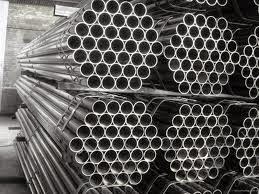
Steel Tubes
Steel Tubes
All steel is made with carbon and iron, how much carbon and alloy is used determines the classification. Most suppliers should, at least, offer the following three materials for their seam or seamless steel tubes.

Carbon Steel Tubes

Steel tube operators usually turn to carbon as an affordable option for many different applications because it is offered in a range of sizes and wall thicknesses – making it easy to find the perfect option for almost any project. In most cases, carbon is a less expensive material than other common materials, including alloy and stainless steel. There are three types of carbon steel tube available for purchase including low carbon steel (the largest class of carbon steel also referred to as mild steel), medium carbon steel and high carbon steel.

Rolled Steel Products
 Alloy Steel Tube
Alloy steel is manufactured by taking carbon steel and adding various elements, including manganese, nickel, copper and aluminum, to it. The addition of these and other elements in various amounts changes the properties of the carbon to create a product with features that carbon steel lacks, like increased hardness or resistance to corrosion for example.To bring out the properties of alloy steel, including weld ability and form ability, treatment with heat is required. 

 Operators who are not satisfied with a few of carbon’s drawback usually turn to steel tube suppliers for alloy tubing that will be more suitable for their projects. Alloy steel is commonly used for tubing more likely to be exposed to more extreme environments and harsher weather conditions.

Steel Pipe
Steel Pipe

Stainless Steel Tube

Probably the most common type of tubing found from steel tube suppliers is stainless steel. It has been alloyed to withstand corrosion and rust, making it the preferred choice for most projects requiring steel tubing. The final product is extremely durable and able to withstand even the harshest conditions, with very low chances of ever rusting. It is also a popular choice because it is recyclable – making stainless steel an earth-friendly option. Because of the multiple different lengths and diameters available, stainless steel tubing can usually be found from suppliers in three different shapes: round, square and rectangular. It is an extremely versatile product used in a wide range of industries including marine, gas and oil transportation, construction, biotech and automotive.

Sunday, 26 April 2015

Steel pipe suppliers feeling effects of long winter


At least one steel pipe supplier is seeing negative effects from a long and harsh winter. Earnings in the second quarter of the fiscal year dropped and the spread between the selling prices of products and the cost of raw material narrowed. The decline in business can be attributed to winter conditions that stalled the production and the shipment of steel products.
 
Delayed production and problems with on-time delivery weren’t the only factors effecting steel pipe suppliers. They also had to deal with higher conversion costs and a much smaller spread between how much raw material costs and how much they were being sold for. Dealing with snow removal and additional heating costs for a prolonged winter can also add up.  The polar vortex of 2013/2014 that gripped most of the nation led to some preparation by manufactures and suppliers for this year’s winter, but in most cases everything is up to Mother Nature and the main focus turns to everyone’s safety in rough conditions.

                                                                                 
steel pipe suppliers


Luckily as the nation begins to thaw out and summer is within reach, companies effected by the cold are expecting a significant turnaround in the last six months of the fiscal year. The summer season creates a surge in demand for steel pipe and other steel products meaning most suppliers will be able to recover. However, to fully improve financial standings costs may need to be cut and facilities may need to be consolidated or closed. Operational volume may also need to be increased in order to achieve lower product costs.

As the industry approaches its peak season, it is important for suppliers and manufacturers to go back and review any policy and procedures in place for continuing operations during winter months, including the safety of those manufacturing the products and delivering them. Any adjustments should be made to ensure that customers’ needs are met efficiently, and with caution. Just because steel suppliers can’t control the weather doesn’t mean they can’t effectively prepare for it.

Thursday, 11 December 2014

Learning More about Steel Sheet Suppliers


                                  Steel sheet is a thin metal sheet of stainless steel up to 6mm thick. While sheets of stainless steel that are thicker than 6mm also exist in the market, they are usually called as stainless steel plate. To avoid confusion, a distinction needs to be observed between sheet metal and plate metal. Steel sheet, unlike the plate metal, has a high surface area to volume ratio. Apart from thickness and physical properties, sheet and plate metals have different applications. 

Steel Pipe Suppliers

                                   Plate metal is generally used in large structures like ships, bridges, turbines, skyscrapers etc. Sheet metal is instead used in our day to day life objects and machines like cars, trains, planes, computers, home appliances, farm equipment, office furniture, machine components and even soda cans. The manufacturing processes for both the type of metals are also different. Forming a sheet of steel metal involves a lot of processes that manufacture parts for a vast amount of purposes. The stock used for steel sheet metal processes is usually formed by rolling and comes in coils. Some of these processes may be applied to plate metal as well however plate, because of it’s thickness, has its own set of problems in processing. Therefore, some of the sheet metal functions and operations do not apply to plate metal.
                                   
Steel Pipe

                                   Let’s discuss the manufacturing processes of sheet metal a little more in detail. Though Steel Sheet Suppliers may not involve directly into any of these steps, an understanding of what goes into behind making of the sheet metal helps them market their business better. Sheet metal is manufactured mostly on a press and parts are formed between two die. The upper die is called as a punch. Sheet metal parts, referenced to as stampings sometimes, are usually economical and easy to produce in large numbers. Sheet metal is formed cold. Usually for sheet metal applications there is no change, or hardly any negligible change in the sheet thickness. For certain processes which include deep drawing, there is a small or expected change in thickness, but in most cases this may be also neglected. Sheet metal produces parts that typically have high strength, good surface and accurate tolerances. 

H Pile

                                 Stainless steel sheet is available in a variety of grades, sizes, types and finishes. Some of them are also available in H sections or H piles, for providing a deep foundation of structures. The process of manufacturing such H sections is also called as H Piling.


Friday, 8 August 2014

Is That Party for Line Pipe Suppliers Really Over?

           Line pipe suppliers, it looks as if the glory days of supplying pipe for the U.S. shale oil boom are numbered. You have my sympathies, but let's get real. Did you really expect the supply of oil to last another 10, or even 20 years with the rise in popularity of renewable sources of energy? If you suppliers were seriously expecting the business between yourselves and the oil companies to last, you have succumbed to a little lapse in judgment I call: wishful dreaming.


steel pipe suppliers

The initial rate of oil production was quite promising. However, there is no real science behind forecasting an oil supply. Production of U.S. shale oil was expected to thrive past the year 2020. Well, "not so fast my friends.” Even with 5.5 years till we hit 2020, new projections are showing that this is the year when production will peak. Here is an opportunity for the steel pipe industry to learn from your greatest blunder; setting your primary focus on supplying a non-renewable resource.

I'm not one to drink the Kool-Aid from the school of thought that the world can survive completely without fossil fuels. However, I have accepted the fact that renewable sources of energy can take a giant load off the production and necessity of fossil fuels. For steel pipe suppliers, there are still tremendous opportunities available. Use your supply of steel to contribute to the growth of alternative forms of energy production and the transition to a greener world.

line pipe suppliers
Things may seem all doom and gloom for your industry at the present time due to those over-forecasted oil production figures. Just take a deep breath – everything will be alright. The party isn't over for your industry quite yet, and it doesn't have to be either. Starts focusing your supply toward more renewable energy sources and watch what happens…Long term industry health! Can it get much better than that?